
Sole Proprietorship Setup₹2,499/-*
The registrations that actually make a proprietorship real
+ 18% GST · no lock-in · Udyam within 1–2 working days; GST usually 3–7 working days; shop and establishment about a week. Most proprietorships are fully set up within two weeks.

Proprietorship Setup,end to end.
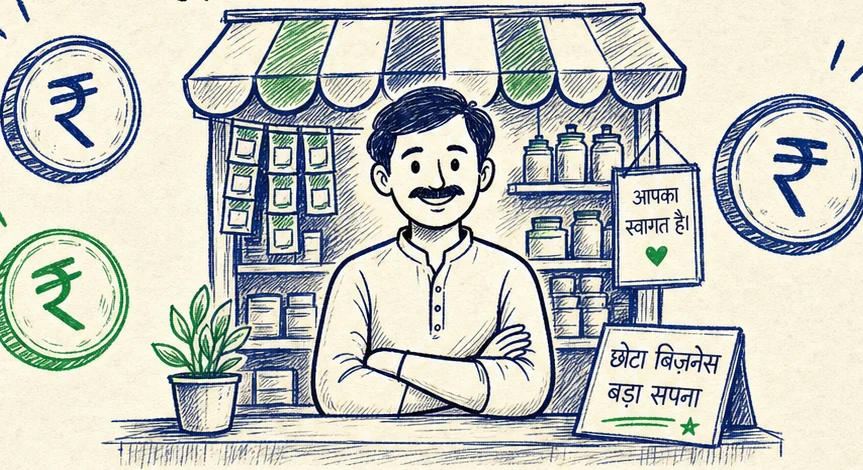
At a glance
Starts at ₹2,499/-* · Udyam within 1–2 working days; GST usually 3–7 working days; shop and establishment about a week. Most proprietorships are fully set up within two weeks.
- Choice of trade name and a check that it is not an obvious conflict
- Udyam registration in the proprietor's name
- GST registration where applicable, or a documented view that it is not
- Shop and establishment registration where the premises require it
- Current account documentation pack and banker coordination
Reviewed by Ashish Kumar Sharma · Founder
Built forthese businesses.
First-time business owners testing an idea
Freelancers and consultants invoicing clients
Traders and retailers operating under a business name
Anyone who needs a current account in a trade name





A proprietorship is the simplest way to start trading in India, and also the most misunderstood — there is no incorporation, no certificate and no separate legal entity.
What makes a proprietorship real is a set of registrations taken in the proprietor's name. We work out which ones your activity actually needs, file them, and get you to a current account and a working compliance calendar.
There is nothing to incorporate
A sole proprietorship is not created by any statute. There is no register of proprietorships, no incorporation certificate and no separate legal person — in law, the proprietor and the business are the same. The business uses your PAN, its profits are your income, and its debts are your debts.
This is why the question people ask, how do I register a proprietorship, has no direct answer. What they actually need is the collection of registrations that banks, customers and departments treat as proof that the business exists.
The registrations that constitute a proprietorship
- Udyam registration — free of government fee, and the most widely accepted proof of a business in a trade name
- GST registration — mandatory beyond the threshold, for inter-state supply and for selling on marketplaces; useful voluntarily where buyers want input credit
- Shop and establishment registration — required for commercial premises, and issued by the state labour department
- Import Export Code — for anyone importing or exporting
- Activity-specific licences — FSSAI for food, drug or trade licences for regulated goods
- EPF and ESI registration — once employee headcount reaches the statutory thresholds
Opening the current account
This is usually the practical objective, and it is where an incomplete setup shows. Banks will not open a current account in a trade name on the proprietor's PAN alone; under their onboarding norms they want two independent proofs that the business exists and operates from the stated address. Udyam with GST, or Udyam with a shop and establishment certificate, is the combination that works most reliably. We assemble the pack before you go to the branch rather than after a rejection.
How a proprietorship is taxed
Business profit is added to your other income and taxed at individual slab rates, with no separate return for the firm. Small businesses within the turnover limits usually declare income on a presumptive basis under section 44AD, and eligible professionals under section 44ADA, filing ITR-4; those outside the presumptive scheme maintain books and file ITR-3. Advance tax, TDS obligations once you cross the applicable thresholds, and GST returns where registered all continue as normal. We set the calendar up at the start so nothing is discovered in July.
When to stop being a proprietorship
The structure is cheap and quick, but liability is unlimited, the business cannot survive the proprietor, and it cannot take on an investor or issue equity to a key employee. The point to move usually arrives with the first of these: a contract with real damages exposure, a lender who wants a balance sheet in the entity's own name, a partner joining, or an investor. Converting is straightforward but every contract, registration and bank mandate has to be reassigned, so it is easier done early.
Why set up through TCC
The common failure is over-registration — being sold a GST number that was never needed, or a licence that does not apply to the activity — and its opposite, discovering a missing registration when the bank or a buyer refuses the file. We scope what your business genuinely needs, register only that, and hand over the certificates with a calendar of what falls due and when.
What's included
- Choice of trade name and a check that it is not an obvious conflict
- Udyam registration in the proprietor's name
- GST registration where applicable, or a documented view that it is not
- Shop and establishment registration where the premises require it
- Current account documentation pack and banker coordination
How we work
01
Scope
We map which registrations your activity actually needs.
02
Register
We file Udyam, GST and other applicable registrations.
03
Bank
We assemble the pack your bank will ask for.
04
Handover
You get certificates and a compliance calendar.
Documents we need
- PAN and Aadhaar of the proprietor
- Passport-size photographs
- Proof of business premises — rent agreement, electricity bill or ownership document
- Proposed trade name and description of the business activity
- Bank account details or a cancelled cheque
- Estimated turnover and the states you will supply into
Frequently asked
Is there a proprietorship registration certificate?+
No. There is no statute under which a proprietorship is incorporated and no single certificate. What exists is a set of registrations taken in the proprietor's name, and together they are what banks, buyers and departments accept as proof of the business.
Which registrations do I actually need?+
It depends on the activity. Udyam is universal and free of government fee. GST is needed if you cross the threshold, sell inter-state or sell on marketplaces. Shop and establishment registration applies to commercial premises. Food, import-export and other activities add their own.
Does the business get its own PAN?+
No. The proprietorship is the proprietor. Your personal PAN is the business PAN, and the business income is taxed in your hands at slab rates.
Which ITR do I file?+
ITR-4 if you are on the presumptive scheme under section 44AD or 44ADA, and ITR-3 if you maintain regular books or are outside the presumptive limits.
How do I open a current account?+
Banks generally require two proofs that the business exists in the trade name. Udyam plus GST, or Udyam plus a shop and establishment certificate, is the usual combination. We assemble the pack before you approach the branch.
Can I use a brand name?+
Yes, you can trade under any name that is not already someone else's registered mark. The name gives you no exclusivity by itself — if the brand matters, register it as a trade mark.
What about liability?+
It is unlimited. There is no separation between business and personal assets, which is the single biggest reason to move to an LLP or a private limited company once there is real revenue or real risk.
Can I convert later?+
Yes. Proprietorships are routinely converted to an LLP or a private limited company. Doing it early is simpler, because contracts, registrations and bank mandates all have to be reassigned to the new entity.
Proprietorship Setup across India. We file for clients in Jaipur, Jodhpur, Udaipur, Kota, Ajmer, Bikaner, Delhi, Mumbai, Bengaluru, Pune, Surat and Ahmedabad, and everywhere the portals reach.
Related services
- GST RegistrationNew GSTIN for your business — end to end, error free
- MSME RegistrationFree government Udyam registration with full expert support
- ITR-4 FilingFor small businesses and professionals opting for presumptive taxation
- PVT RegistrationIncorporate your Pvt Ltd company — DSC, DIN, name approval and MOA/AOA
- Section 8 CompanyRegister a not-for-profit Section 8 company — MCA licence, DSC, DIN and MOA/AOA
- Startup India RecognitionDPIIT recognition, and an honest view of what it is actually worth

Ready for hassle-free Proprietorship Setup?
Pick a slot or WhatsApp us — we'll take it from there.
- Reply within one working hour on WhatsApp
- Fixed monthly fee, agreed before any work starts
- No lock-in — month to month, 15 days’ notice
Request a callback
Two fields and you are done. We reply on WhatsApp within one working hour, Mon–Fri 10:00–19:00 and Sat 10:00–14:00 IST.
or message us on WhatsApp instead →