
If you run a small business or work as an independent professional, keeping detailed books and getting them audited can feel like a heavy burden for the size of your operation. The Income Tax Act offers a much simpler route: the presumptive taxation scheme. You declare a fixed percentage of your turnover as income, skip the detailed bookkeeping, and avoid a tax audit. For a large share of India's MSMEs and freelancers, it is the most practical way to stay compliant without drowning in paperwork.
What presumptive taxation actually means
Normally, your taxable business income is your revenue minus every allowable expense, which means you must track and document each expense and, above certain thresholds, get your accounts audited. Presumptive taxation flips that. Instead of proving your actual profit, the law simply presumes your profit is a set percentage of your turnover. You pay tax on that presumed figure, and you are not required to maintain regular books or undergo a tax audit. The trade-off is straightforward: you give up the ability to claim your real expenses in exchange for far less compliance.
Section 44AD: for small businesses
Section 44AD is designed for resident individuals, Hindu Undivided Families and partnership firms (other than LLPs) running an eligible business. The scheme is available where total turnover or gross receipts do not exceed ₹2 crore, and this limit is raised to ₹3 crore where cash receipts during the year are no more than 5% of total receipts. So if your business is largely digital, you get a higher ceiling.
The presumed income is 8% of turnover. Crucially, that rate drops to 6% for the portion of turnover received through banking or digital modes — a deliberate incentive to move away from cash. You can declare a higher income if your actual profit is greater, but you cannot declare less than the presumptive rate while still enjoying the scheme's benefits.
Section 44ADA: for professionals
Section 44ADA mirrors the idea for specified professionals such as those in legal, medical, engineering, architectural, accountancy, technical consultancy and interior decoration fields. Here the gross receipts limit is ₹50 lakh, extended to ₹75 lakh where cash receipts during the year do not exceed 5% of total receipts.
The presumed income under 44ADA is 50% of gross receipts. So a consultant with ₹40 lakh in receipts would declare ₹20 lakh as income and pay tax on that, with no obligation to itemise expenses or maintain detailed books. For many professionals whose real expenses are modest, this is both simpler and often genuinely tax-efficient.
The catch worth understanding before you opt in
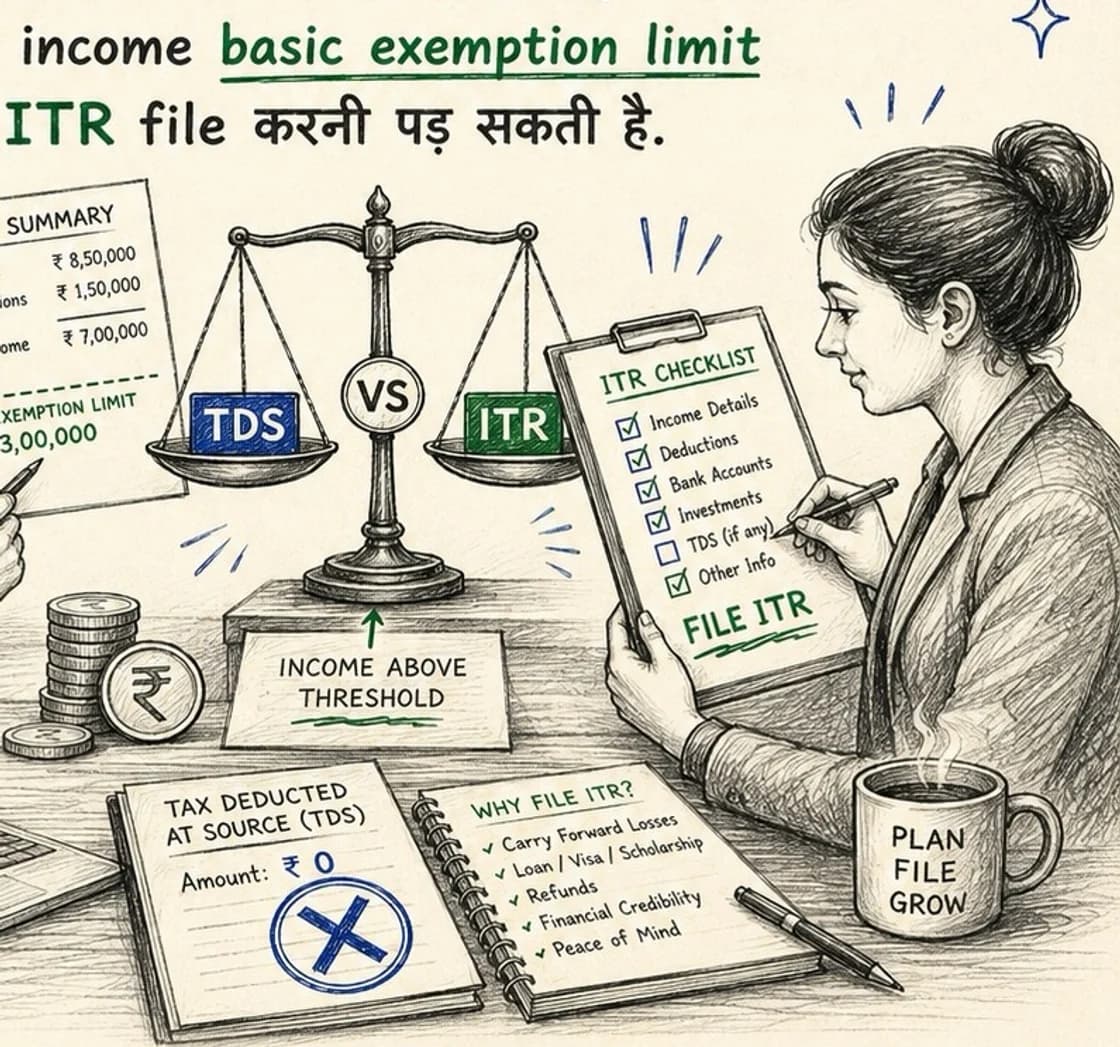
The scheme rewards consistency. If you opt for Section 44AD and then, within the next five years, choose to declare income below the presumptive rate, you lose access to the scheme for the following five assessment years — and in that situation you may be required to maintain books and get a tax audit if your income exceeds the basic exemption limit. So treat opting in as a multi-year commitment, not a one-off.
It is also important to remember that presumptive income is still business income for the year, and you still pay advance tax. Under 44AD this is generally due as a single instalment by 15 March of the financial year. Missing it attracts interest, so the simplicity on bookkeeping does not extend to ignoring deadlines.
Which ITR form and how to file
Businesses and professionals opting for the presumptive scheme generally file using ITR-4 (Sugam), the simplified return designed for exactly these taxpayers. Because the scheme removes the need for detailed profit-and-loss statements, the form itself is lighter, which is part of what makes the whole approach attractive to small operators.
Check which ITR form applies and whether a tax audit is triggered →
Is presumptive taxation right for you?
The scheme is a strong fit if your actual expenses are low relative to revenue, your turnover sits comfortably within the limits, and you value simplicity and predictability. It is less attractive if your genuine profit margin is well below the presumptive rate, because then you would be paying tax on income you did not actually earn. The right answer depends on your real numbers — exactly the kind of question worth running past an advisor before you file.
If you would like help deciding whether 44AD or 44ADA suits your business, or you simply want your return filed correctly and on time, The Consulting Crew handles presumptive filings for businesses and professionals every season. Get in touch and we will take it from there.
This article is general information, not tax advice. Rules, limits and rates can change; confirm the current-year specifics for your business before acting.