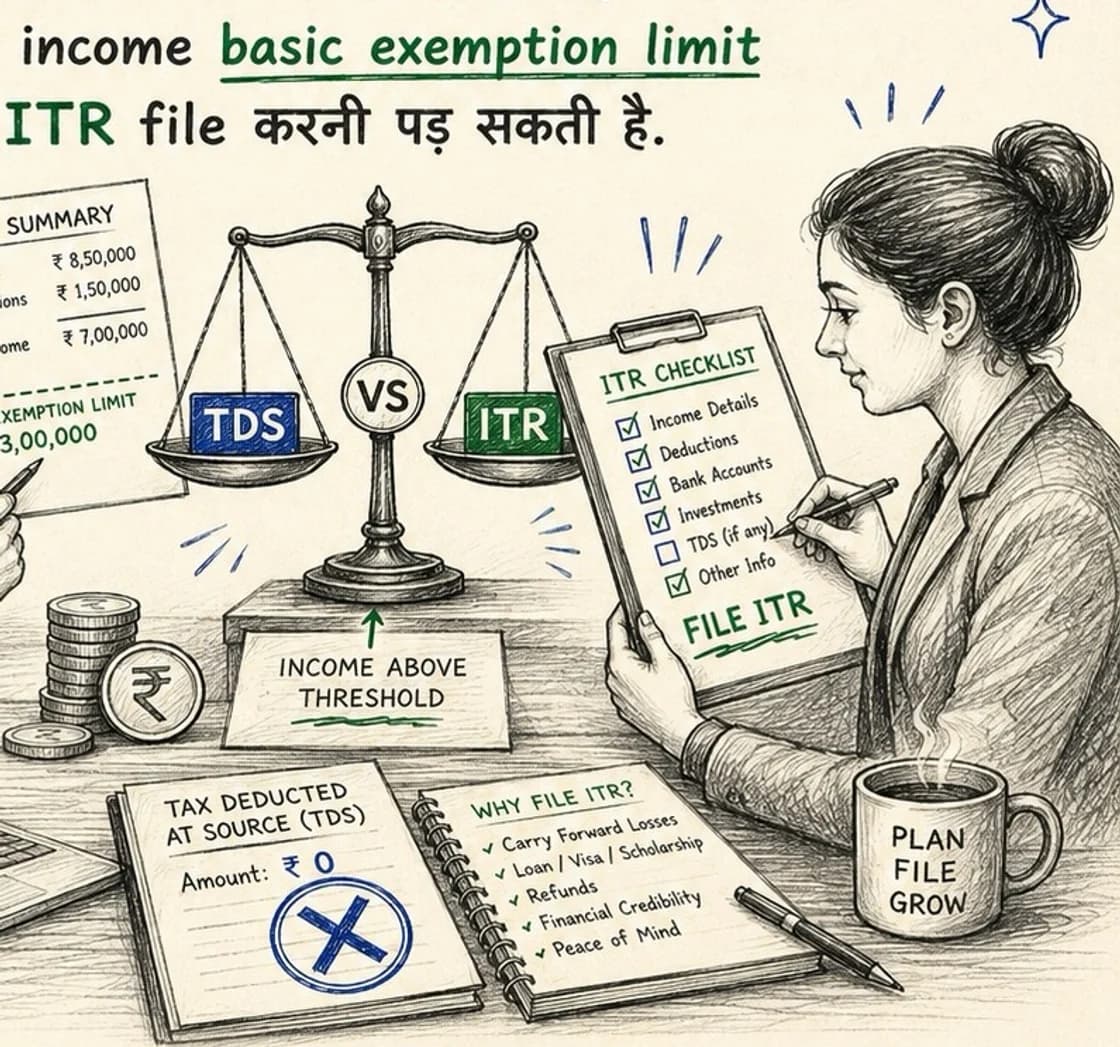





If your total tax liability for the year is likely to exceed ₹10,000, you are generally expected to pay it in advance across the year rather than in one lump sum at filing. For business owners and professionals, planning these instalments protects both cash flow and your interest cost.
Who has to pay advance tax
Most individuals, professionals and businesses with a net tax liability above ₹10,000 after TDS must pay advance tax. Resident senior citizens without business income are usually exempt. Those under the presumptive scheme have a simplified single-instalment rule.
Estimate this year’s tax before the next instalment →
The four instalment dates
- By 15 June — at least 15% of the estimated tax.
- By 15 September — at least 45% (cumulative).
- By 15 December — at least 75% (cumulative).
- By 15 March — 100% of the estimated tax.
How interest builds up
Pay too little or too late and interest applies — section 234C for shortfalls in individual instalments and section 234B where the total advance tax paid falls short. This interest accrues monthly and is entirely avoidable with a reasonable estimate paid on time.
A simple way to stay on track
Review your projected income each quarter, adjust your estimate, and pay the instalment a few days before the due date. For seasonal businesses, front-loading payments in stronger quarters smooths the burden. A short quarterly review is all it takes to avoid surprises at year-end.
This article is general information, not tax or legal advice. Rules can change; confirm specifics for your business before acting.