
A CMA (Credit Monitoring Arrangement) report is the standardised set of financial statements and projections banks require before sanctioning or renewing business loans and working-capital limits. It typically covers past audited years, the current estimated year and two or more projected years — operating statement, balance sheet, fund-flow, working-capital assessment and ratio analysis — in a format bankers can appraise quickly.
Banks use the CMA to test whether your ask is fundable: projected sales growth against your track record, current ratio and debt-service coverage against their norms, and the working-capital gap that justifies the limit you want. How much the bank should fund flows directly from these statements, so the CMA is not paperwork — it is the argument for your loan.
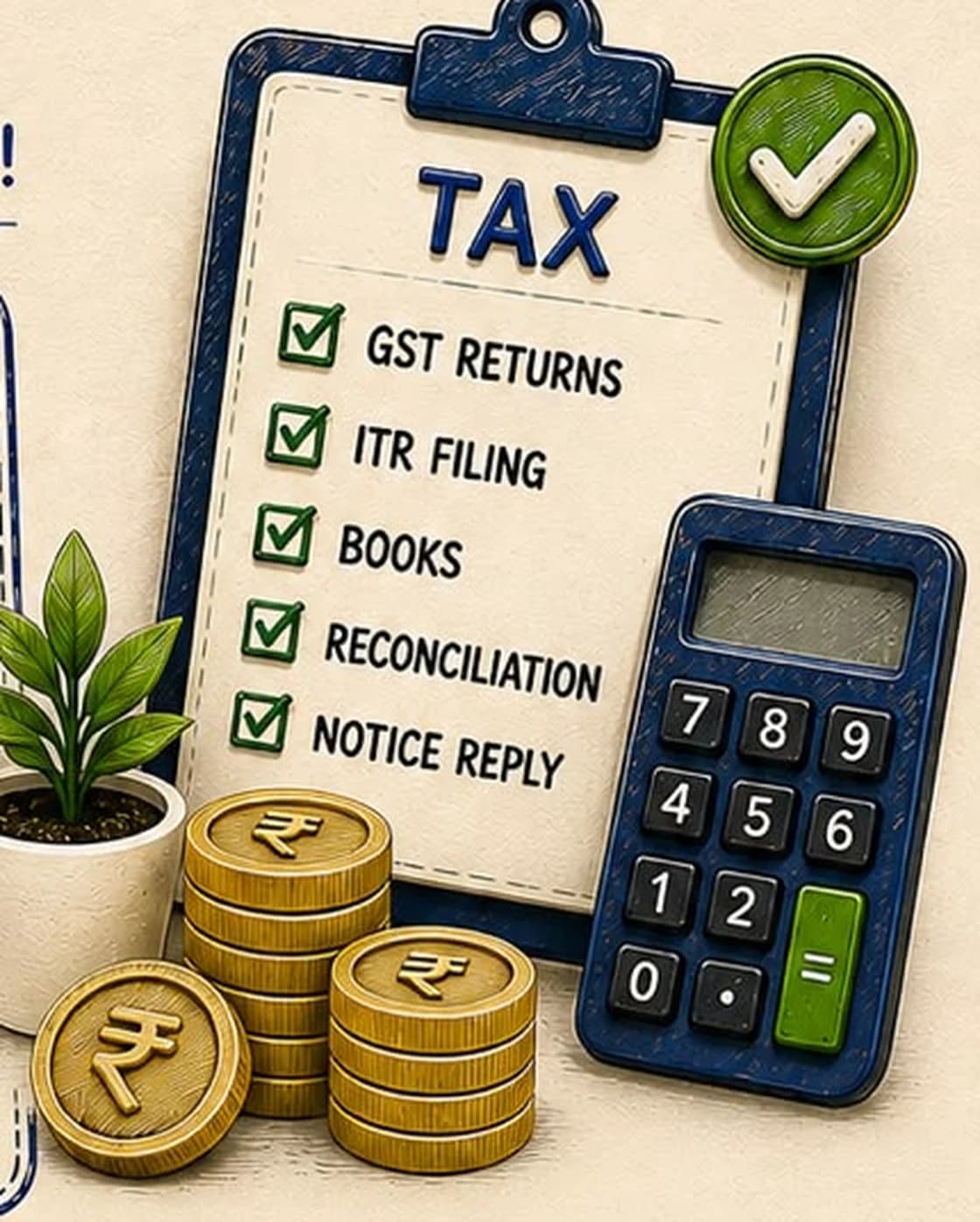
Have it built from real books, not a template. Sales in the CMA should reconcile with your GST returns and ITR, growth assumptions should be explainable in one sentence each, and the projected balance sheet must actually balance against the proposed borrowing. A CMA prepared with your accountant, carrying a short note on assumptions, moves files faster than a bare spreadsheet.
The classic rejection trigger is a hockey-stick projection — flat sales for three years, then a dramatic jump the year you need money — or numbers that contradict your GST filings, which bankers now cross-check routinely. Modest, defended projections beat impressive, unexplained ones. If reality later beats the projection, nobody minds; the reverse conversation at renewal time is much harder.
Frequently asked
- What is CMA report?
- A CMA (Credit Monitoring Arrangement) report is the standardised set of financial statements and projections banks require before sanctioning or renewing business loans and working-capital limits. It typically covers past audited years, the current estimated year and two or more projected years — operating statement, balance sheet, fund-flow, working-capital assessment and ratio analysis — in a format bankers can appraise quickly.
- What does a CMA report contain?
- Past audited years, the current estimated year and two or more projected years — operating statement, balance sheet, fund-flow, working-capital assessment and ratio analysis — in a format bankers can appraise quickly.
- Who needs a CMA report?
- Banks require it before sanctioning or renewing business loans and working-capital limits. Sales in the CMA should reconcile with your GST returns and ITR, which bankers now cross-check routinely.
Reviewed to the law in force in FY 2026-27. General information, not advice — confirm the position for your facts before acting.