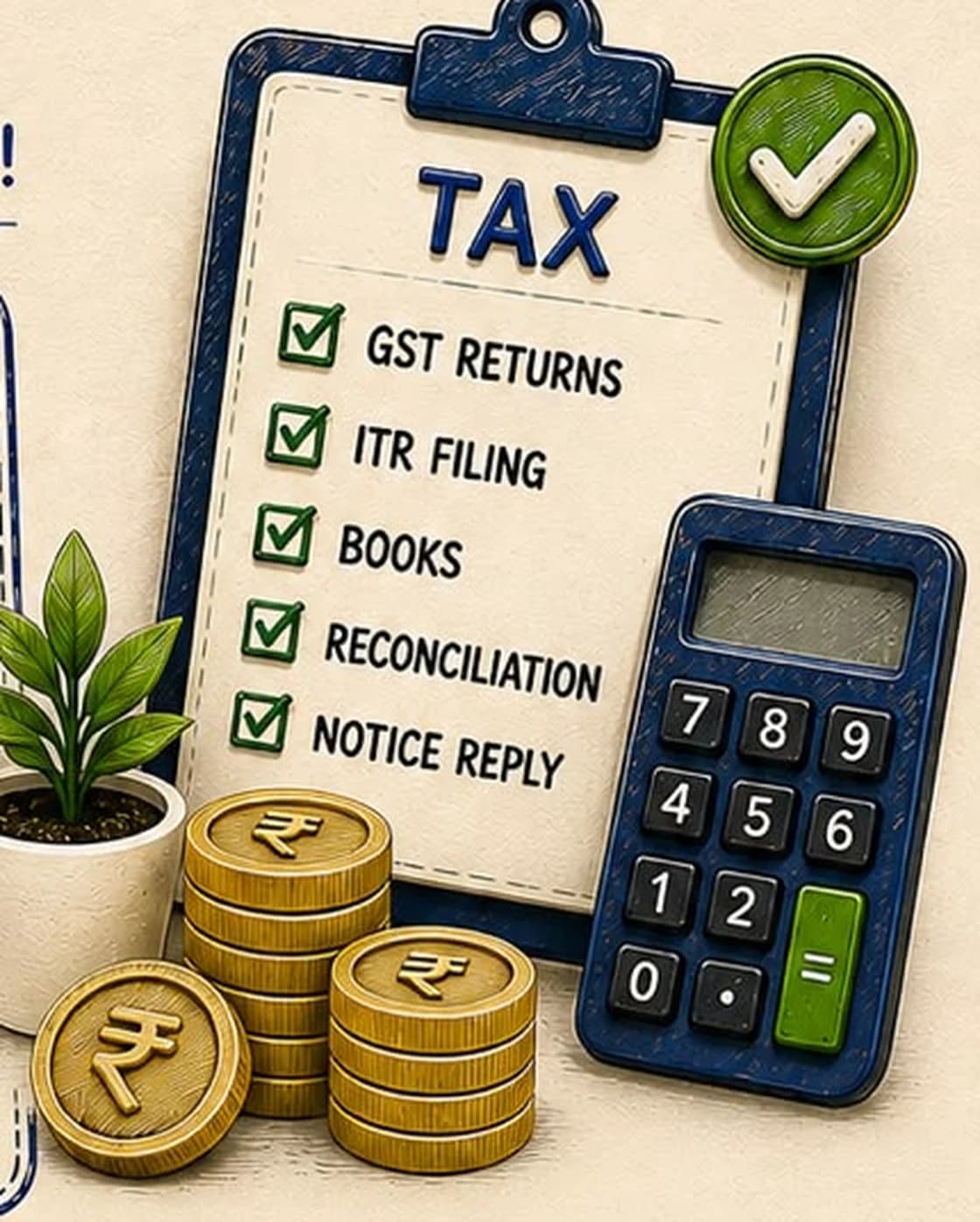
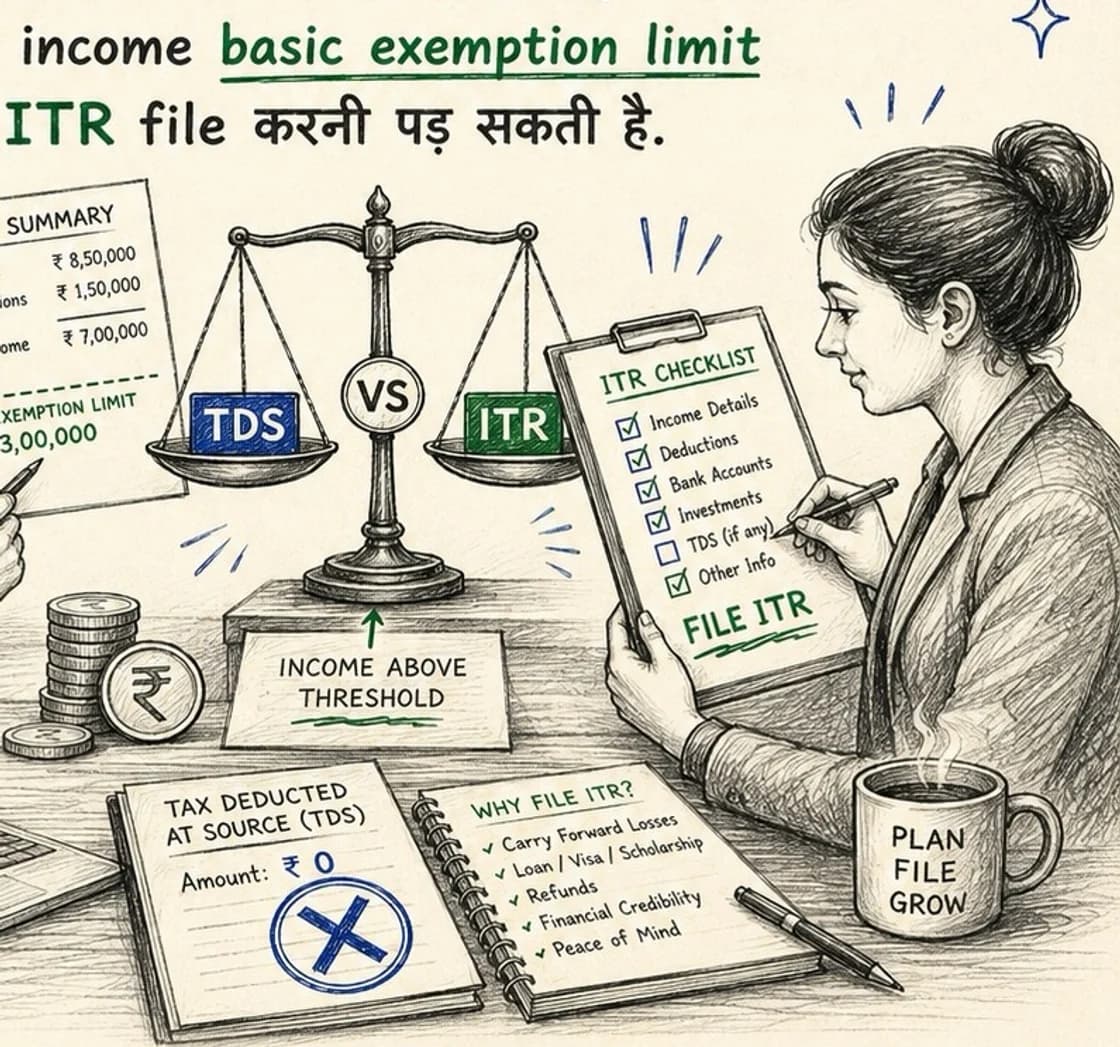
Before you file, the department already holds a reconstruction of your financial year assembled from banks, employers, registrars, brokers and mutual funds. Your return is read against it automatically. Most scrutiny that reaches small taxpayers begins as a mismatch between what was reported about you and what you reported yourself — which makes reconciliation the highest-value hour of the filing season.
What each statement holds
| Statement | Scope | Best used for |
|---|---|---|
| Form 26AS | Tax deducted and collected, advance tax, self-assessment tax, refunds | Confirming tax credits you can claim |
| AIS | A wide record of reported transactions — interest, dividends, securities, property, deposits | Confirming income the department believes you had |
| TIS | An aggregated summary derived from the AIS, category by category | A quick overview and the figure that feeds pre-filling |
The practical division of labour: use 26AS to make sure you are claiming every rupee of TDS you are entitled to, and the AIS to make sure you are not omitting income that has already been reported about you.
Why they disagree, and which disagreements matter
- Timing. A deductor filing a TDS return late means the credit appears in 26AS after you have already looked. Always re-check before filing, not once in April.
- Gross versus net. The AIS often reports gross figures where your books hold net — sale value against capital gain, for example. This is the single most common false alarm.
- Joint holdings. Interest on a joint account or a jointly held property may appear in full against both holders. It needs apportioning, not accepting.
- Duplication. The same transaction reported by two sources appears twice. Genuinely a data issue, and exactly what the feedback mechanism exists for.
- Wrong PAN. Someone else’s transaction attributed to you. Rare, and serious enough to act on immediately.
A difference between AIS and your books is not automatically an error in your books. It is a question to be answered — and the answer belongs on record before the return is filed.
The feedback mechanism
The AIS lets you respond to each reported item — that the information is correct, that it relates to another person, that it is duplicated, that it is denied, and so on. Submitting feedback creates a documented explanation attached to the item.
This is worth doing properly. An unexplained mismatch invites an automated query. The same mismatch with recorded feedback is a position you have already taken, which is a materially better place to be if the year is ever examined. Our note on how the department uses AI covers how these comparisons are actually run.
A workable pre-filing routine
- Download 26AS, AIS and TIS on the same day, close to filing rather than early.
- Tie every TDS entry in 26AS to a receipt in your books, and chase any deductor whose entry is missing — an absent credit is your money.
- Walk the AIS category by category and mark each item: agreed, needs apportioning, gross-versus-net, or genuinely wrong.
- Submit feedback on everything in the last two categories.
- Reconcile the residue to your return, and keep the working. If the year is queried, this working is the answer.
- Only then file — see ITR filing for small business and the belated and revised return rules if you are already past the date.
Where we come in
We reconcile 26AS and AIS as a standard step before filing any return, and keep the working so a later query has an immediate answer. If a mismatch notice has already arrived, our notice handling service deals with the response.
This article is general information, not professional advice. Limits, rates and dates change by notification — confirm the position for your own year before acting on it.