
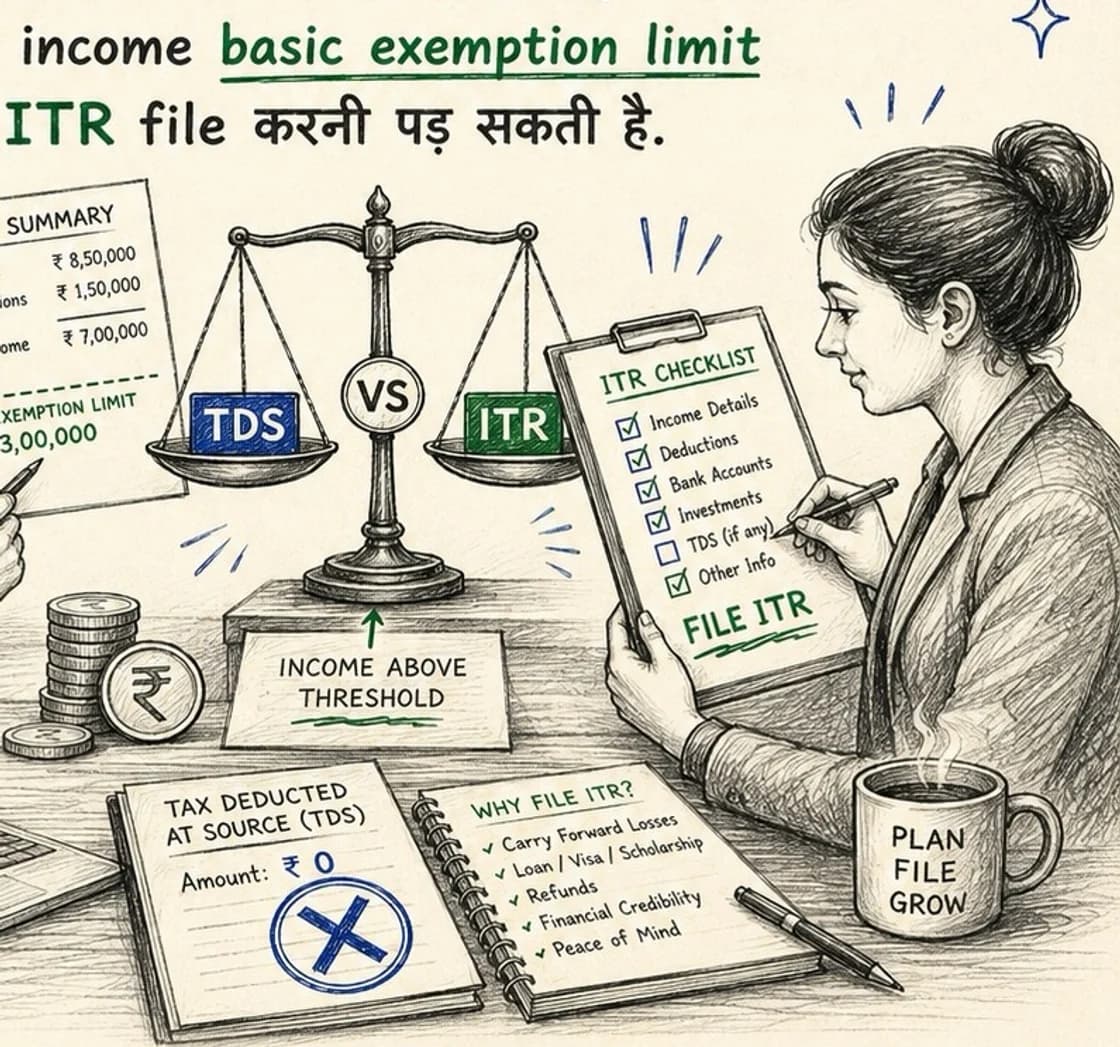
TDS is tax deducted at source — the payer cuts a percentage from specified payments like rent, interest, contractor fees or professional fees and deposits it with the government against the payee's PAN. For FY 2026-27, key thresholds include ₹30,000 per contract under 194C, ₹50,000 for professional fees under 194J and ₹50,000 per month for rent under 194I.
Once your business crosses the applicable audit or turnover triggers, you become a deductor: you need a TAN, you deduct at the prescribed rate when crediting or paying, deposit the tax by the 7th of the next month (30 April for March), and file quarterly TDS returns. FY 2026-27 thresholds worth memorising: 194A interest ₹50,000 (₹1 lakh for senior citizens), 194C ₹30,000 single or ₹1 lakh aggregate, 194H commission ₹20,000 at 2%, 194I rent ₹50,000 per month, 194J ₹50,000, 194Q purchases ₹50 lakh, and the newer 194T on payments to partners at ₹20,000 and 10%.
For an MSME owner, the two sides matter equally. As deductor, late deposit attracts interest and late return filing attracts fees, and expense disallowance can follow non-deduction. As deductee, reconcile the TDS others cut on your income against Form 26AS and AIS before filing — credit sits against your PAN only if the deductor filed correctly.
The most expensive slip is the no-PAN rate: pay someone who has not furnished a valid PAN and you must deduct at 20% regardless of the normal rate. Second most common: partnerships forgetting 194T applies to remuneration, commission and interest paid to their own partners since it took effect.
Related terms
Frequently asked
- What is TDS?
- TDS is tax deducted at source — the payer cuts a percentage from specified payments like rent, interest, contractor fees or professional fees and deposits it with the government against the payee's PAN. For FY 2026-27, key thresholds include ₹30,000 per contract under 194C, ₹50,000 for professional fees under 194J and ₹50,000 per month for rent under 194I.
- What are the TDS thresholds for FY 2026-27?
- 194A interest ₹50,000 (₹1 lakh for senior citizens), 194C ₹30,000 single or ₹1 lakh aggregate, 194H commission ₹20,000 at 2%, 194I rent ₹50,000 per month, 194J ₹50,000, 194Q purchases ₹50 lakh, and 194T on payments to partners at ₹20,000 and 10%.
- When must TDS be deposited?
- By the 7th of the next month (30 April for March), with quarterly TDS returns. Late deposit attracts interest, late return filing attracts fees, and paying someone who has not furnished a valid PAN means deducting at 20%.
Reviewed to the law in force in FY 2026-27. General information, not advice — confirm the position for your facts before acting.