
The section 87A rebate is a tax rebate for resident individuals that wipes out tax liability below an income threshold — under the new regime it makes normal income up to ₹12 lakh effectively tax-free. Under the Income-tax Act 2025 this rebate now lives in section 156, though everyone still calls it the 87A rebate.
Mechanically, tax is first computed on your income per the slab rates, and the rebate then cancels that tax if your total income is within the threshold. Under the new regime the rebate is worth up to ₹60,000, which is exactly the slab tax on ₹12 lakh — hence the headline that income up to ₹12 lakh pays no tax. Salaried individuals get the ₹75,000 standard deduction on top, stretching the tax-free salary to ₹12.75 lakh. Marginal relief softens the cliff for incomes just above the line.
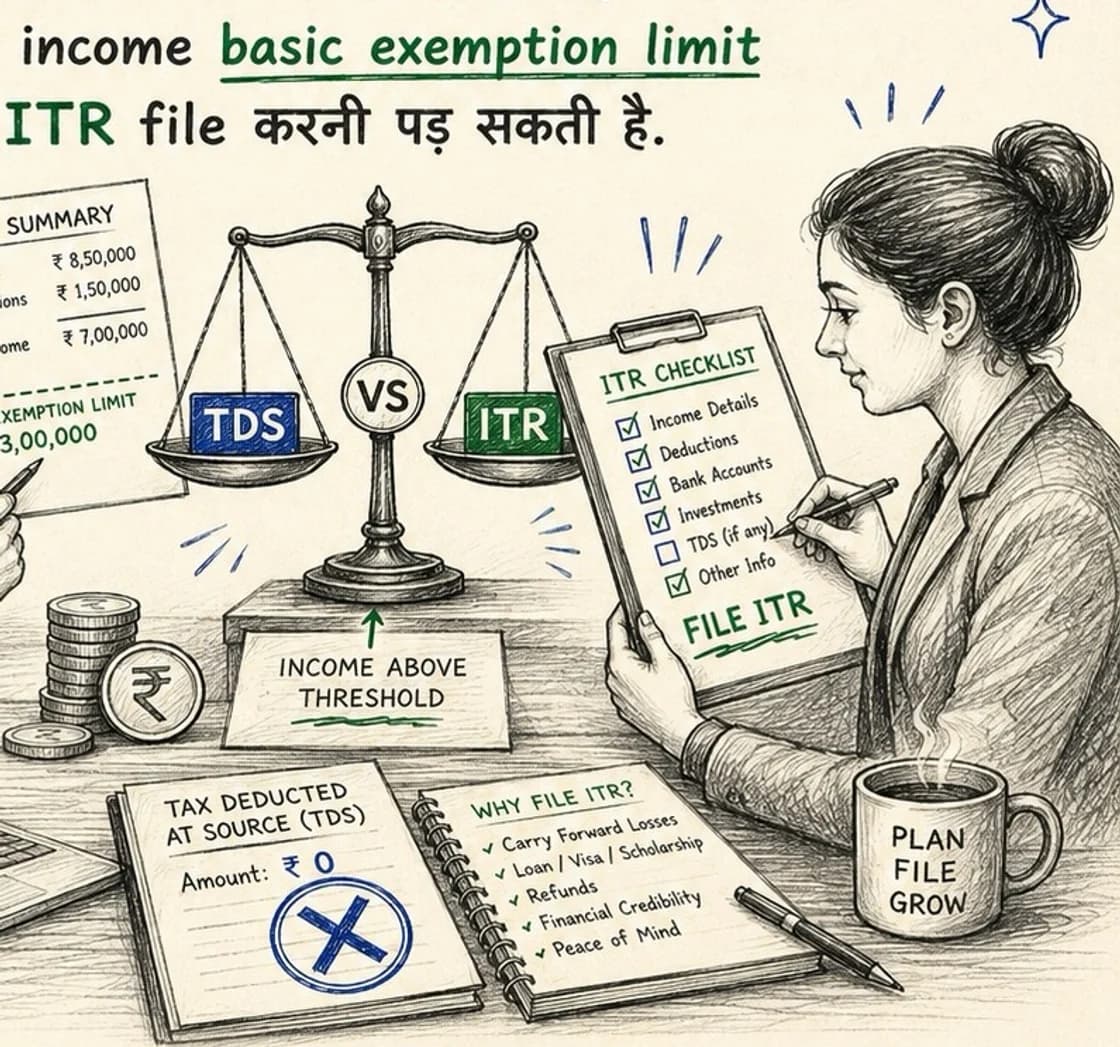
For a small business owner or professional, this changes the filing-versus-tax calculus: you may owe zero tax yet still be required to file a return, and filing remains worthwhile anyway to claim TDS refunds and maintain income proof for loans. Presumptive filers should note the rebate applies to the tax on their declared profit like anyone else's income.
The big edge case: the rebate applies to tax at normal slab rates, not to special-rate income. Short-term capital gains on listed shares and similar special-rate items are taxed even if your total income sits under ₹12 lakh. Many small traders discover this only when the intimation under section 270(1) adds back the tax their return software forgave.
Frequently asked
- What is Section 87A rebate?
- The section 87A rebate is a tax rebate for resident individuals that wipes out tax liability below an income threshold — under the new regime it makes normal income up to ₹12 lakh effectively tax-free. Under the Income-tax Act 2025 this rebate now lives in section 156, though everyone still calls it the 87A rebate.
- How much is the section 87A rebate?
- Under the new regime the rebate is worth up to ₹60,000, which is exactly the slab tax on ₹12 lakh. Salaried individuals get the ₹75,000 standard deduction on top, stretching the tax-free salary to ₹12.75 lakh.
- Does the 87A rebate apply to capital gains?
- No — the rebate applies to tax at normal slab rates, not to special-rate income. Short-term capital gains on listed shares and similar special-rate items are taxed even if your total income sits under ₹12 lakh.
Reviewed to the law in force in FY 2026-27. General information, not advice — confirm the position for your facts before acting.