An export is a zero-rated supply: no tax on the outward side, and full recovery of the tax you paid on inputs. That is a genuinely favourable regime, and it is conditional. The conditions are documentary, and they are checked mechanically, which is why exporters lose money to clerical mismatches far more often than to any question of law.
The two registrations
- IEC — Importer Exporter Code. Issued by DGFT against your PAN, and required for almost any commercial import or export. It is inexpensive and quick to obtain.
- LUT — Letter of Undertaking, filed in RFD-11. This lets you export without paying IGST, so your working capital is not locked up waiting for a refund.
Both carry a renewal trap. The IEC must be confirmed every year between April and June even if nothing has changed, or it is deactivated — and a deactivated IEC stops shipments at the port. The LUT is valid for one financial year only and must be filed afresh each year, before the first export of that year, not after.
We handle both in our IEC registration service; the annual LUT sits inside the GST services cycle.
The two ways to export under GST
| Route | What happens | Refund of |
|---|---|---|
| Under LUT, without payment | No IGST charged on the export invoice | Unutilised input tax credit, claimed in RFD-01 |
| With payment of IGST | IGST paid on the export, then refunded | The IGST itself, with the shipping bill acting as the application |
The LUT route is better for cash flow and is what most regular exporters use. The IGST-paid route is more automatic but ties up money in the interim. The refund mechanics for both are in our GST refund guide.
The document chain
- Export invoice, carrying the correct declaration about whether it is under LUT or with payment of IGST.
- Packing list and, where applicable, the transport document.
- Shipping bill — the pivotal document, because the automated refund route matches it against your GST return.
- GSTR-1 with the export table completed, including the shipping bill number, date and port code.
- GSTR-3B consistent with GSTR-1 for the same period.
- Realisation evidence, with eBRC where required, closing the loop on payment received.
The most common failure is between steps 3 and 4: a shipping bill number or port code entered incorrectly in GSTR-1. The systems match automatically, the match fails silently, and the refund simply does not arrive. Nobody writes to tell you.
Sector and state specifics
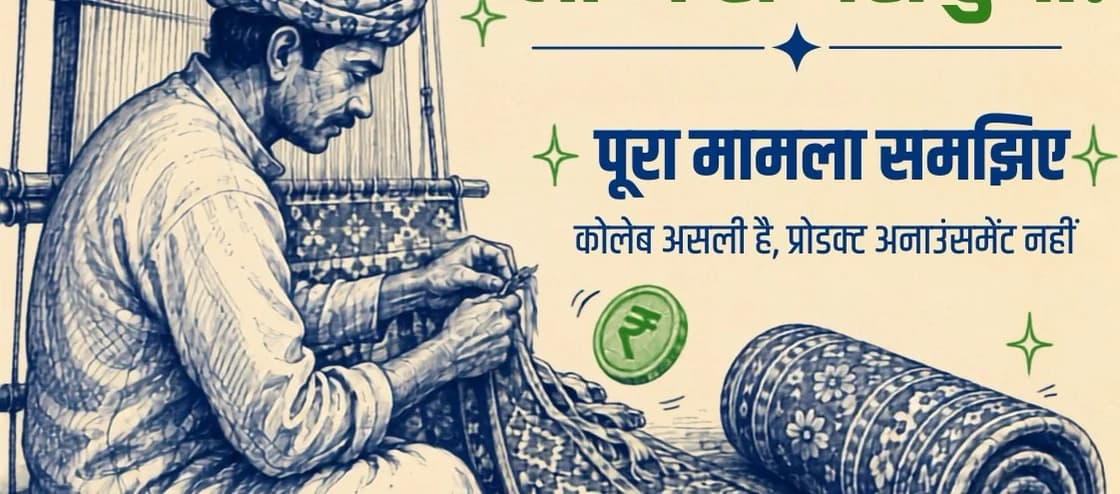
Jaipur exporters have two sectors with additional layers. Gems and jewellery carry their own valuation and hallmarking considerations — covered in Jaipur jewellery export compliance. Textiles and handicrafts have their own duty-drawback and scheme positions, and our textile and handicraft industry page sets out how we work with them.
Also worth checking before you price an order: whether the buyer country requires a certificate of origin, and whether any incentive scheme you are counting on is still open for your product line.
Where we come in
We set up the export compliance baseline once — IEC, the annual LUT, the GSTR-1 export table mapped correctly to shipping bills — and then run the refund cycle so it does not silently stall. Our IEC registration and GST services work together on this.
This article is general information, not professional advice. Limits, rates and dates change by notification — confirm the position for your own year before acting on it.