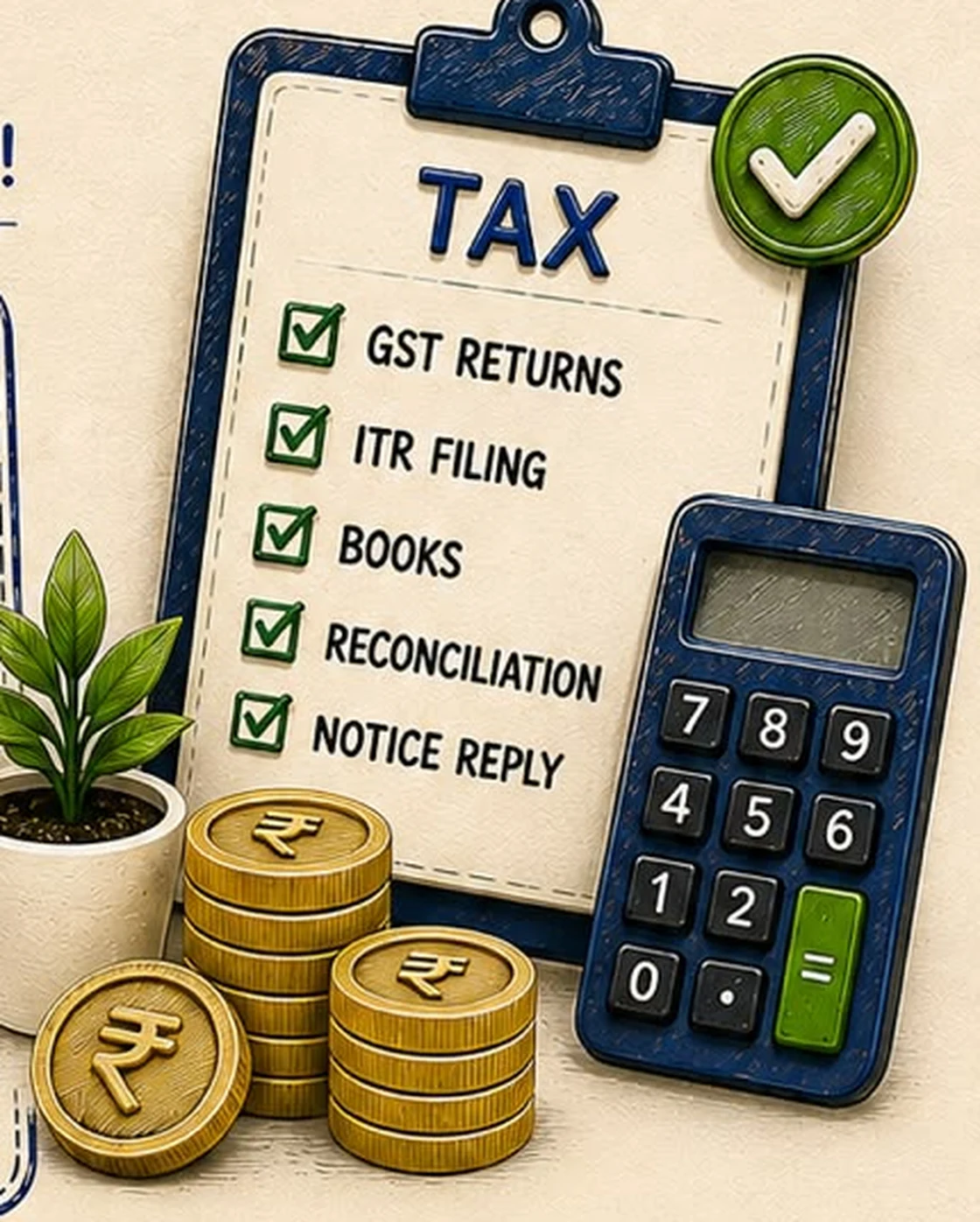
ITR-5 and ITR-6 Filing for Firms, LLPs and Companiesfrom ₹4,999/-*
Entity returns for partnership firms, LLPs and companies, reconciled to the books
+ 18% GST · no lock-in · Typically 5–10 working days from receipt of complete books, longer where the audit is being finalised in parallel.

ITR-5 / ITR-6 Filing,end to end.

At a glance
Starts at ₹4,999/-* · Typically 5–10 working days from receipt of complete books, longer where the audit is being finalised in parallel.
- Finalisation of the profit and loss account and balance sheet
- Computation of income with partner remuneration, interest and disallowances
- Reconciliation with GST returns, AIS, Form 26AS and TDS credits
- Regime and concessional-rate assessment for companies
- Preparation, digital-signature filing and follow-up on processing
Reviewed by Ashish Kumar Sharma · Founder
Built forthese businesses.
Partnership firms and LLPs of any size
Private limited companies and OPCs
AOPs, BOIs and business trusts
Entities whose audit and return need to be filed consistently

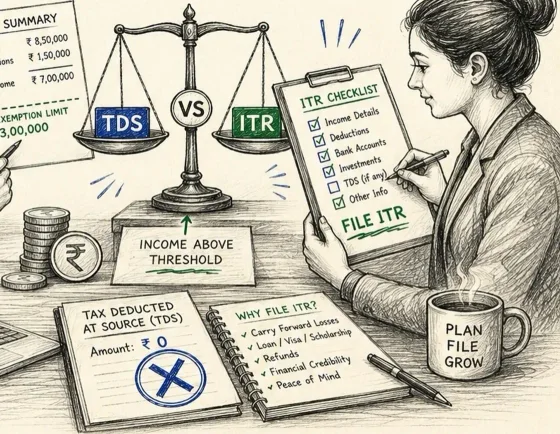


ITR-5 is the return for partnership firms, LLPs, AOPs and similar entities; ITR-6 is the return for companies. Both are entity returns that must agree with audited financials, GST turnover and the department's own data.
We finalise the accounts, compute the income with the disallowances and partner adjustments applied correctly, model the regime choice where a company has one, and file under digital signature before the due date.
Which form applies
ITR-5 is used by partnership firms, limited liability partnerships, associations of persons, bodies of individuals, business trusts, investment funds, estates and artificial juridical persons. ITR-6 is used by companies, except those claiming exemption in respect of income from property held for charitable or religious purposes.
The choice is rarely difficult, but the consequences of getting it wrong are real: a return filed on the wrong form can be treated as defective, and the notice arrives after the due date has passed.
ITR-5 — firms, LLPs and AOPs
A firm or LLP is taxed as a separate assessee at the flat rate applicable to firms, with surcharge and cess on top, and there is no slab benefit. Remuneration and interest paid to partners are deductible only within the limits and conditions of section 40(b) and only where the deed authorises them — the most common adjustment we make on an incoming file is remuneration that the deed never provided for.
LLPs carry a second layer of compliance. Form 8 and Form 11 are due to the Registrar irrespective of turnover, and an LLP audit is required once contribution or turnover crosses the prescribed limits, separately from the tax audit test.
ITR-6 — companies
Every company files ITR-6 electronically under digital signature; there is no alternative verification route. The return has to agree with the audited financial statements adopted at the annual general meeting and filed with the Registrar, and with the tax audit report where one is required, because mismatches between the three are picked up automatically in processing.
A dormant company files too. Nil activity does not remove the obligation, and a year of losses that goes unreported is a year of losses that cannot be set off later.
Due dates and audit linkage
The return is due on 31 August where no audit applies (the Finance Act 2026 moved non-audit business entities from 31 July) and 31 October where a tax audit does; since every company is audited, ITR-6 is in practice a 31 October return. Entities required to furnish a report in respect of international or specified domestic transactions get until 30 November. The audit report must be filed before the return, and the two must carry the same figures — filing the return first, or filing on figures the auditor later changes, produces a mismatch that takes longer to fix than it took to cause.
The decisions that are actually made in the return
An entity return is not a data-entry exercise. A domestic company can opt for the concessional rate under section 115BAA by surrendering specified deductions, and the option cannot be withdrawn once exercised, so it has to be modelled against brought-forward losses, unabsorbed depreciation and any incentives being claimed. Minimum tax provisions, disallowances for late statutory payments, and set-off and carry-forward of losses all turn on choices made at the time of filing. We compute the alternatives and put the comparison in front of you before anything is submitted.
Why file through TCC
The value in an entity return is in the reconciliation — books to GST turnover, TDS to Form 26AS and AIS, the tax return to the audited accounts and to what was filed with the Registrar. We do that reconciliation before filing rather than in reply to a notice afterwards, file under digital signature ahead of the due date, and stay with the file through processing.
What's included
- Finalisation of the profit and loss account and balance sheet
- Computation of income with partner remuneration, interest and disallowances
- Reconciliation with GST returns, AIS, Form 26AS and TDS credits
- Regime and concessional-rate assessment for companies
- Preparation, digital-signature filing and follow-up on processing
How we work
01
Share data
Send books, bank statements and GST returns.
02
We finalise
We close the accounts and compute taxable income.
03
You approve
Review the financials, tax and regime choice.
04
File
We file with digital signature and track processing.
Documents we need
- Books of account, trial balance and last year's financial statements
- Bank statements for the full financial year
- Partnership deed or LLP agreement, or memorandum and articles
- GST returns and turnover reconciliation
- Form 26AS, AIS and TDS certificates
- Fixed asset register, loan statements and audit report where applicable
Frequently asked
Who files ITR-5?+
Partnership firms, LLPs, associations of persons, bodies of individuals, business trusts and investment funds, estates and artificial juridical persons — broadly, entities that are not individuals, HUFs or companies.
Who files ITR-6?+
Companies, other than those claiming exemption in respect of income from property held for charitable or religious purposes, which file a different form.
Does ITR-6 need a digital signature?+
Yes. Company returns must be filed electronically under digital signature; there is no verification by Aadhaar OTP or by post.
What are the due dates?+
31 August where no audit applies (Finance Act 2026) and 31 October where a tax audit does. Companies are audited in every case, so ITR-6 is a 31 October return. Entities with international or specified domestic transactions requiring a report get until 30 November.
Does a dormant company still file?+
Yes. A company files a return every year regardless of activity, and so does an LLP. Nil returns are still returns, and the loss you fail to report is a loss you cannot carry forward.
How are partner remuneration and interest treated?+
They are deductible in the firm's or LLP's hands only within the limits and conditions of section 40(b), and only if authorised by the deed. Amounts allowed to the firm are then taxable in the partners' hands.
Should my company opt for the concessional rate?+
It depends. Section 115BAA offers a lower rate in exchange for giving up specified deductions and it cannot be withdrawn once exercised, so it needs modelling against brought-forward losses and any incentives you are claiming. We run both computations before you decide.
What if I miss the due date?+
A belated return can still be filed but interest and a late-filing fee apply, and business losses other than unabsorbed depreciation cannot be carried forward. For an entity with losses, missing the date is expensive for years afterwards.
ITR-5 / ITR-6 Filing across India. We file for clients in Jaipur, Jodhpur, Udaipur, Kota, Ajmer, Bikaner, Delhi, Mumbai, Bengaluru, Pune, Surat and Ahmedabad, and everywhere the portals reach.
Related services
- Tax AuditStatutory tax audit under section 44AB — Form 3CA/3CB and 3CD
- Company ROCAnnual MCA filings — AOC-4, MGT-7, DIR-3 KYC and statutory registers
- Bookkeeping & MISMonthly books, ledgers, P&L, balance sheet and MIS dashboards
- ITR-3 FilingFor business owners, professionals and traders with F&O or intraday income
- Notice HandlingReplies to GST, income tax and TDS notices — drafting to hearings
- GST Return FilingMonthly GSTR-1 & GSTR-3B, reconciliation and on-time compliance


Ready for hassle-free ITR-5 / ITR-6 Filing?
Pick a slot or WhatsApp us — we'll take it from there.
- Reply within one working hour on WhatsApp
- Fixed monthly fee, agreed before any work starts
- No lock-in — month to month, 15 days’ notice
Request a callback
Two fields and you are done. We reply on WhatsApp within one working hour, Mon–Fri 10:00–19:00 and Sat 10:00–14:00 IST.
or message us on WhatsApp instead →