Scheme money is real money: interest knocked off a loan for years, a slice of project cost returned as subsidy, state taxes reimbursed against an entitlement certificate. But scheme information is scattered across portals, PDFs and hearsay — and the numbers in circulation are often two revisions old. Here is the current working map we use for Rajasthan clients. Headline figures are indicative; every scheme's operational guidelines move, and we verify entitlements before any application goes in.
The Rajasthan schemes worth knowing
| Scheme | What it gives | Best fit |
|---|---|---|
| RIPS 2024 | SGST-linked reimbursement, interest and capital subsidy options on new investment; richer packages for thrust and sunrise sectors | Units making fresh capital investment in Rajasthan |
| MLUPY | Interest subvention on bank loans (rate slabs by loan size), routed through the state single-window | New and expanding micro/small units borrowing from banks |
| iStart Rajasthan | Startup recognition, incubation, mentorship and grant/seed support that can run into tens of lakhs for rated startups | Tech-enabled startups registered in Rajasthan |
| Vishwakarma Yuva | Loan support with interest subvention and margin-money assistance for young and women entrepreneurs | Youth and women setting up new enterprises |
| Dr. Ambedkar Dalit Adivasi Udyam Protsahan | Enhanced margin money and interest subsidy for SC/ST entrepreneurs | SC/ST-owned enterprises in Rajasthan |
The central schemes that stack alongside
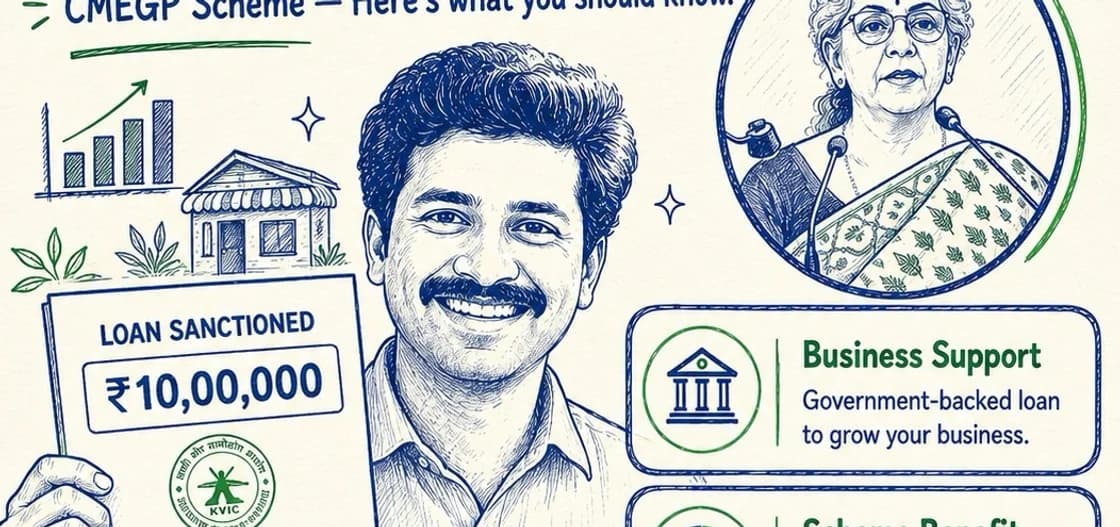
The state list works best combined with the central stack — covered in depth in our guide to central MSME funding schemes. The short version: PMEGP for new units (project cost up to ₹50 lakh manufacturing / ₹20 lakh services, subsidy 15–35% by category and location); Mudra term and working-capital loans up to ₹10 lakh, with the Tarun Plus window up to ₹20 lakh for repeat borrowers; CGTMSE collateral-free guarantee cover now reaching ₹10 crore; Stand-Up India (₹10 lakh–₹1 crore for SC/ST and women entrepreneurs); and PM Vishwakarma for artisan trades. A current Udyam registration is the practical entry ticket to all of it.
What the money actually looks like
A worked example we see often: a new food-processing unit near Jaipur with a ₹40 lakh project cost. Structured well, that can become a PMEGP application with a 25–35% subsidy depending on category and location, a bank loan guaranteed under CGTMSE with no collateral, margin money part-funded by a state scheme where eligible, and RIPS entitlements on the investment. The difference between that stack and a plain ₹40 lakh loan is measured in lakhs over the project's life — for the same unit, the same machines, the same promoter.
Why applications fail
- The project report does not survive the bank. Bankers read DSCR, margin and realistic projections. A DPR downloaded from a template, with sales growing 40% a year and no basis, dies in the first meeting. This is why we build bank-format project reports and CMA data rather than filling forms.
- Documents disagree with each other. Udyam says trading, the DPR says manufacturing; GST turnover and ITR turnover diverge; the address differs across proofs. Analytics-era lenders notice.
- Wrong scheme for the entity. PMEGP is for new units — an existing business “restarted” on paper gets caught and blacklisted. There is almost always a correct scheme; forcing the wrong one wastes a year.
- Nobody follows up. Applications sit at the bank branch or DIC until someone chases them, politely and in writing, every week. Follow-up is half the service.
How we can help
We run the full loop: matching your project to the right state and central stack, building the DPR and CMA the bank format demands, Udyam registration and document alignment, filing the applications, and chasing them to sanction. If a loan or subsidy is part of your 2026-27 plan, bring us the idea before you commit costs — sequencing the scheme stack correctly is worth more than any single application.
Also read: how to get a business loan as an MSME — what lenders actually check →
Scheme guidelines, amounts and eligibility change with notifications. Figures here are indicative headline numbers; verify current operational guidelines — or have us verify them — before applying.